Research & Instructional Marketing™ Case Study — California’s Commission for Behavioral Health
CBH: Turning Dense Policy Into a Tool People Actually Use

How it started
California's Behavioral Health Services Act requires counties to include community members in local behavioral health planning. The mandate was real. The path to participation wasn't.
The policy manual outlining how to engage — dense, jargon-heavy, written for insiders — was the only resource available to the public. The California Behavioral Health Commission (CBH) recognized the problem: the people this law was designed to include couldn't get through the document written to include them.
They needed something different, so they called us.
What we did
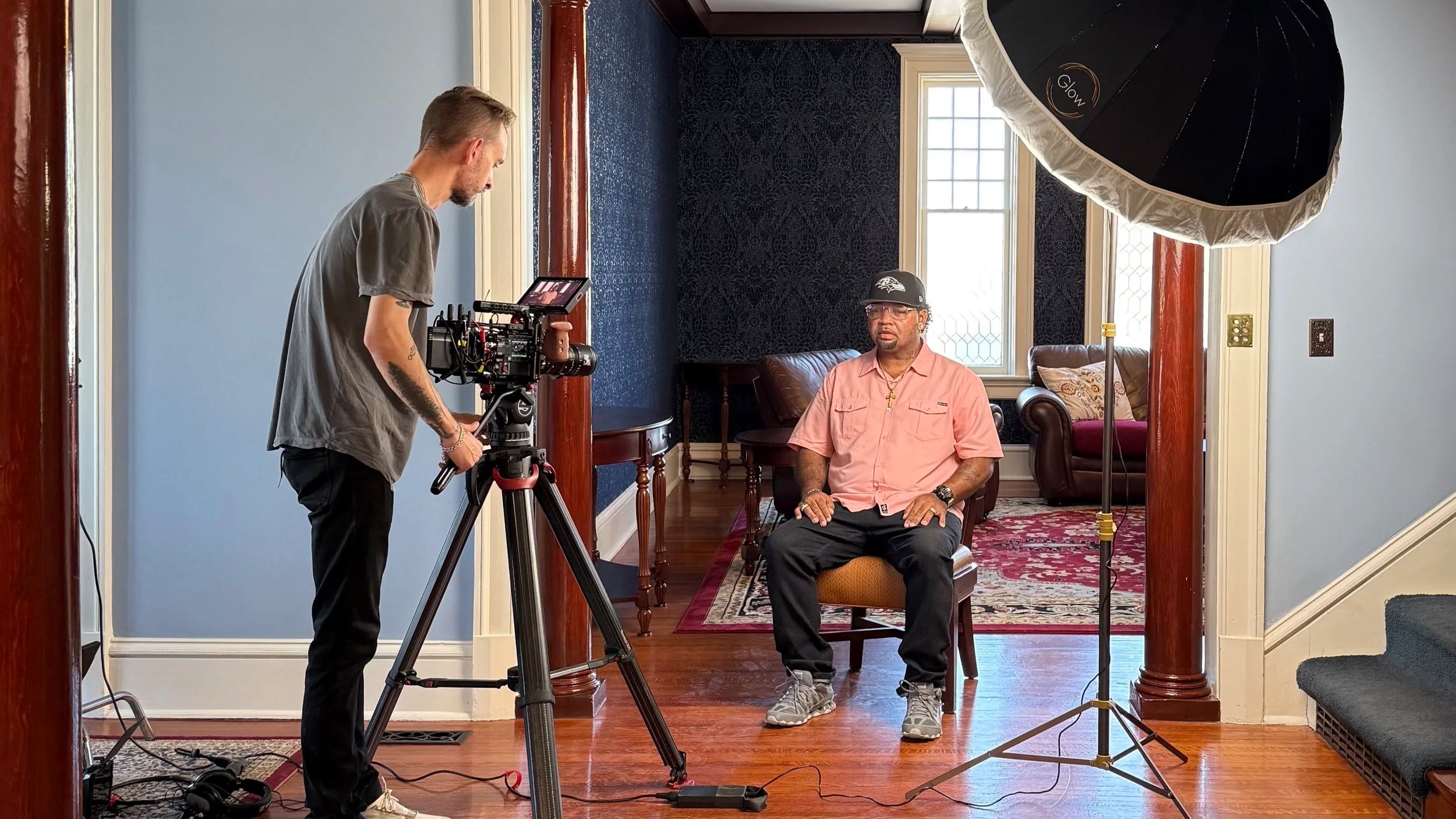
Program 11 conducted stakeholder interviews with county behavioral health leaders, service providers, and community organizers. We participated in CBH's own community listening sessions and mapped every complexity point in existing materials where understanding consistently broke down.
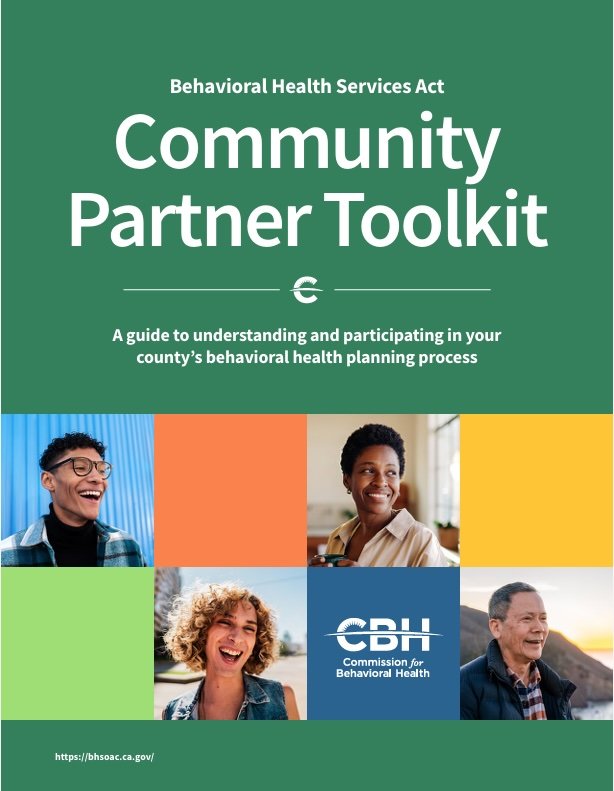
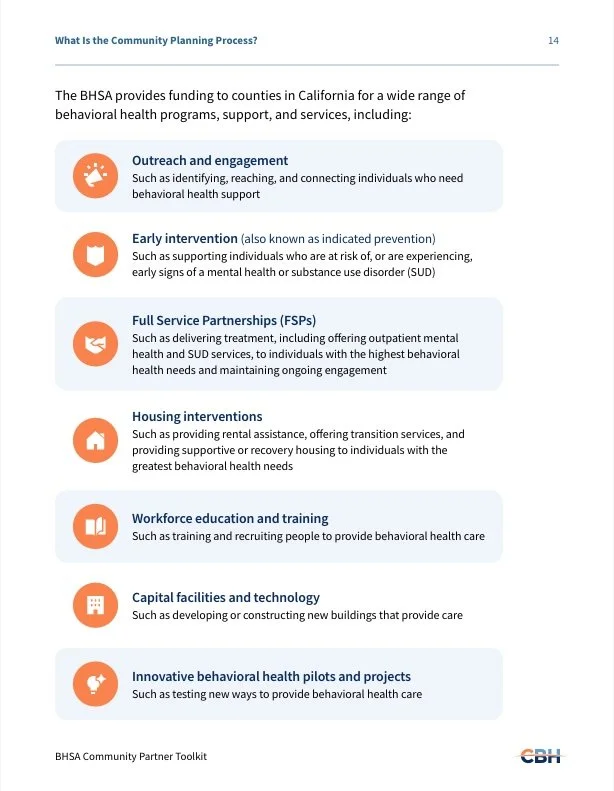
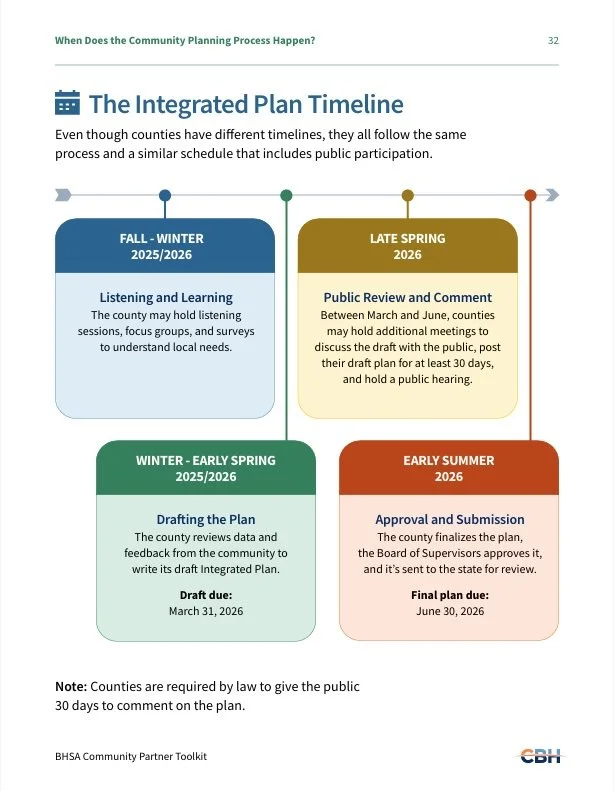
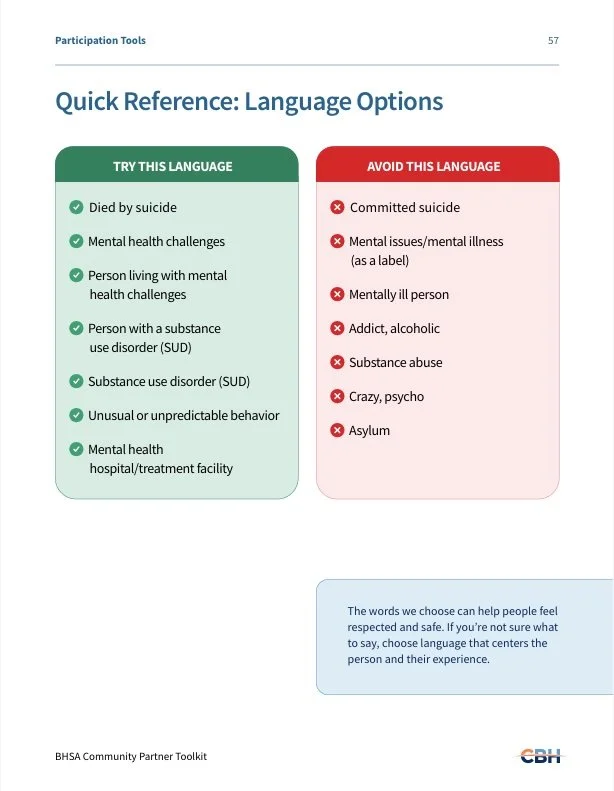
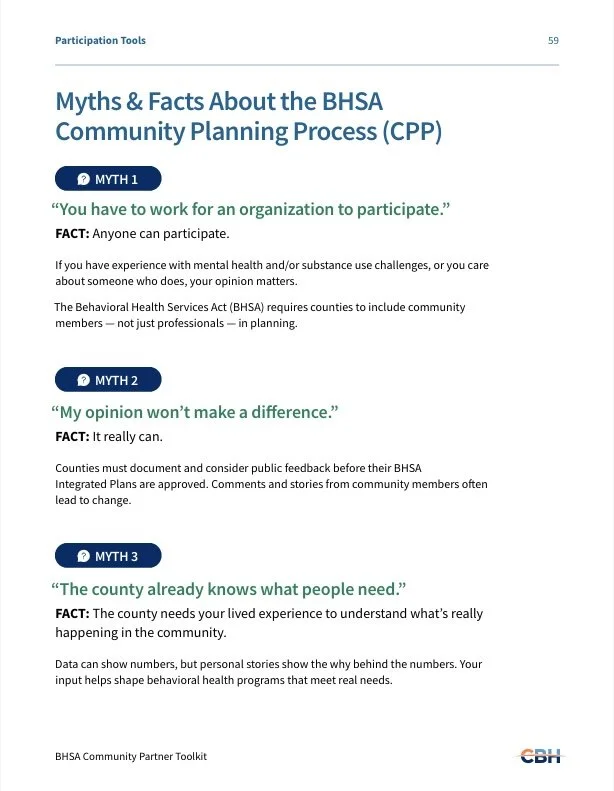
Then, using our Instructional Marketing™ methodology, we built the BHSA Community Partner Toolkit around four priorities: plain-language clarity, progressive concept sequencing, inclusive design, and activation tools — worksheets, participation scripts, comment templates, and checklists that help people do something, not just understand something.
Our a-ha moment? The issue wasn't just the policy manual's words; it was the architecture. We knew that a new toolkit needed a clear entry point for the community, so we mapped the layout to invite them in. We organized every section around a logical progression — starting with "What is this?" and leading into "What do I do next?" — transitioning from the policy manual's wall of text into a functional, step-by-step roadmap.
How it’s going
Community members and stakeholders across California describe the toolkit as surprisingly easy to follow — for a topic that had felt inaccessible before. Demand was strong enough that CBH expanded translation into more languages than originally planned.
The toolkit is now the go-to resource for understanding how to participate in the Community Planning Process — and a model for how public agencies can communicate with the communities they serve.
In 2026, the work was recognized with a MUSE Silver Award for Branded Content.