Research & Video Storytelling Case Study — CBH Early Psychosis Intervention
Making the case for early psychosis care to the people who can scale it
How it started
Every year, nearly 21,000 Californians experience a first episode of psychosis. Without the right care, many of them face a cascade of consequences that can follow them for decades: interrupted education, lost jobs, housing insecurity, incarceration, and higher mortality.
There's a proven answer. Coordinated Specialty Care (CSC) is the evidence-based standard of care for early psychosis, and it works. It wraps a young person in support during the earliest stage of illness, with case management, peer and family partners, and a team that meets every week to keep them stable and connected to their community. Yet CSC in California meets less than 10 percent of the existing need. Scaling it to 90 percent would reach an additional 17,000 people each year and generate an estimated $858 million in system cost savings and productivity gains.
So why isn't it everywhere? The Commission's diagnosis was clear: CSC isn't well known, well understood, or well financed. And psychosis carries a stigma so heavy that it tends to end conversations before they start, including the ones decision-makers need to have.
As long-term partners, CBH asked us to help change that conversation. The goal they set at kickoff was simple and ambitious. After watching, a legislator or policy staffer should be asking, why doesn't this exist everywhere? And they should want to send the video to someone who can do something about it.
What we did
We approached the video the way we approach every engagement, as reporters first. Before we wrote a word of script, we needed to understand more about what CSC is, why it works, and who could explain it with authority.
We started with the leading expert. Dr. Tara Niendam of UC Davis's EPI-CAL program, the leading voice on Coordinated Specialty Care in California, anchored the story. We also set out to feature people who'd been through CSC and the families who supported them. Finding anyone ready to talk about psychosis on camera turned out to be the hardest part of the project, which tells you how much stigma the video had to work against. So we built the story around Tara's authority and made the outcomes, and the human stakes behind them, impossible to miss.
We built a video plan before we built a video. Through pre-production meetings, SME pre-interviews, and a treatment the Commission reviewed and signed off on, we developed the key messages, the interview questions, and a three-part story arc.
We wrote for decision-makers, in words anyone could follow. The audience was policymakers and their staff, people looking for solutions they can bring back to constituents. So we led with outcomes, lives and dollars saved, and kept medical jargon out of the way while still honoring the experiences of people living with psychosis.
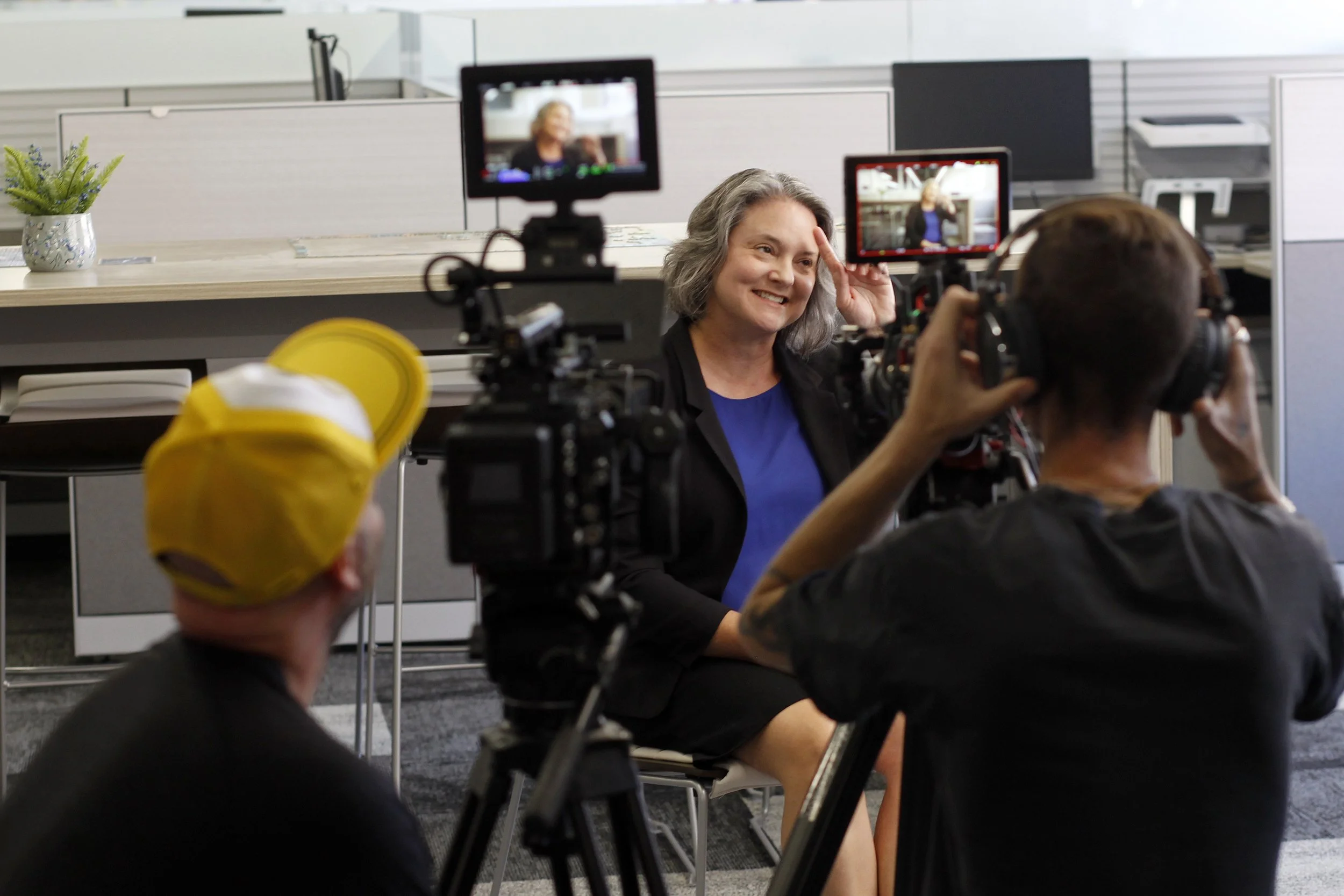
We produced it end to end. An interview shoot, b-roll, licensed music, on-screen text and light motion graphics, color correction, and sound design, delivered as one explainer of about four minutes plus two 60-second cut-downs for social media.
How it’s going
The video was presented to the full Commission and public attendees at CBH's quarterly meeting on August 20, 2026. The discussion that followed was so engaged that the first agenda item ran nearly 40 minutes longer than planned.* That's the kind of response that makes our week.
The next day, the Commission published the video on its newsroom blog (https://bhsoac.ca.gov/newsroom/blog/expanding-hope-how-coordinated-specialty-care-changes-lives-for-californians-experiencing-early-psychosis/), inviting readers to watch it, share it with their networks, and advocate for expanded CSC access across California.
Why it matters
Policy change needs more than evidence. It needs people who care enough to act on it. By pairing clinical authority with a clear, human account of what's at stake, we helped CBH give a proven but little-known model of care a story that policymakers can understand and pass along.
*The Commission made up the time before the meeting closed.